
Camino Packing Tips: What We Loved – and What We’d Leave Behind

Our best Camino packing tips, including our most and least used items
Packing for the Camino de Santiago is a bit of an art form – especially when you’re carrying everything on your back. Before we set out to walk the Camino Francés, we spent a lot of time researching Camino packing tips and thinking through what we actually needed. We wanted our packs to be as light and practical as possible – filled only with the essentials and not much more.
And we have to say: we nearly nailed it.
Not perfectly, of course. There are always a few things you don’t need or wish you’d done differently. But overall, we were happy with what we brought – and maybe even more proud of what we left behind.
In this post, we’re sharing our top Camino packing tips, including:
- 5 MVP items we’d bring again in a heartbeat
- 5 things we packed but didn’t really need
- How to build your own personalized, dialed-in packing list
Want our full Camino packing list? Scroll below to download our printable packing list!
Camino Packing Tips for Smart Packing
When you’re walking 20+ kilometers a day with everything you own strapped to your back, every ounce counts. Overpacking means extra weight on your knees, shoulders, and feet – and that’s a quick path to injury or burnout.
But under packing can backfire too. You don’t want to be scrambling to find gear mid-walk or totally unprepared for weather changes, blisters, or laundry days.
We approached our packing list with intention:
- What would we use daily?
- What could we buy on the trail if needed?
- What adds more burden than benefit?
This mindset helped us keep things minimal, flexible, and lightweight – and we think that’s key.
Even if you plan to have your bag transported each day (instead of carrying it), it’s still important to pack smart. Camino accommodations rarely have elevators. You may still end up lugging your bag up narrow staircases or squeezing it into a small locker in a shared room. We found that a streamlined bag made every part of the journey – from walking to settling into each night’s lodging – just a little bit easier.
Curious about our full packing list? Grab it below!
Our 5 MVP Camino Items
These are the items we reached for daily, relied on completely, and would pack again in a heartbeat. They’re not about gear obsession – just practical, honest wins.
1. A Breathable, Sun-Protective Shirt with a hood
This was my holy grail item. A long-sleeve UPF shirt with a hood ended up being the perfect balance of sun protection and breathability. The hood might seem extra, but it’s incredibly useful: pull it up under your cap for bonus shade, warmth on a windy morning, or protection in light rain.
- Liz’s pick: Oiselle Flyout Chill Hoodie
- Steve’s pick: REI Sahara Shade Hoodie (also comes in a women’s version)
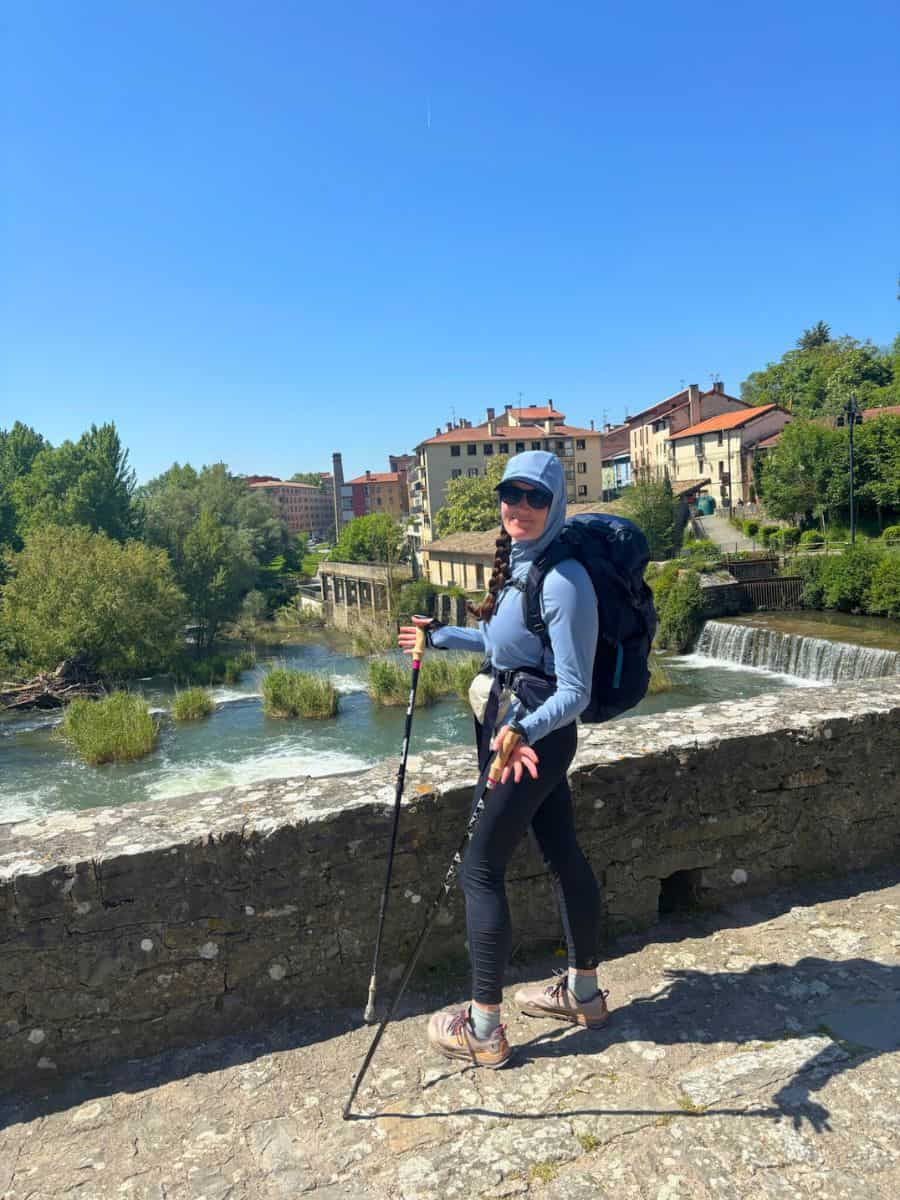
Go for UPF 50 if you can. Lower UPF ratings like 20 or 30 still offer good protection, but when you’re outdoors all day, every day, the extra coverage is worth it.
2. A Realistic Rain “System”
Don’t just toss any raincoat into your pack and call it good. Think through how you actually want to walk in the rain – for hours, potentially.
Camino walkers tend to fall into two rain-gear camps: poncho enthusiasts, and raincoat + umbrella folks. We started out thinking we’d be in the latter group, but the more we heard about the Altus poncho, the more intrigued we were.
Unlike flimsy plastic ponchos, the Altus has full sleeves, a generous hood, built-in expansion for your backpack, and length to cover your body down past your knees. It slips right over you and your pack – no need to unstrap anything when the skies open up. We both opted for the Altus and didn’t regret it.
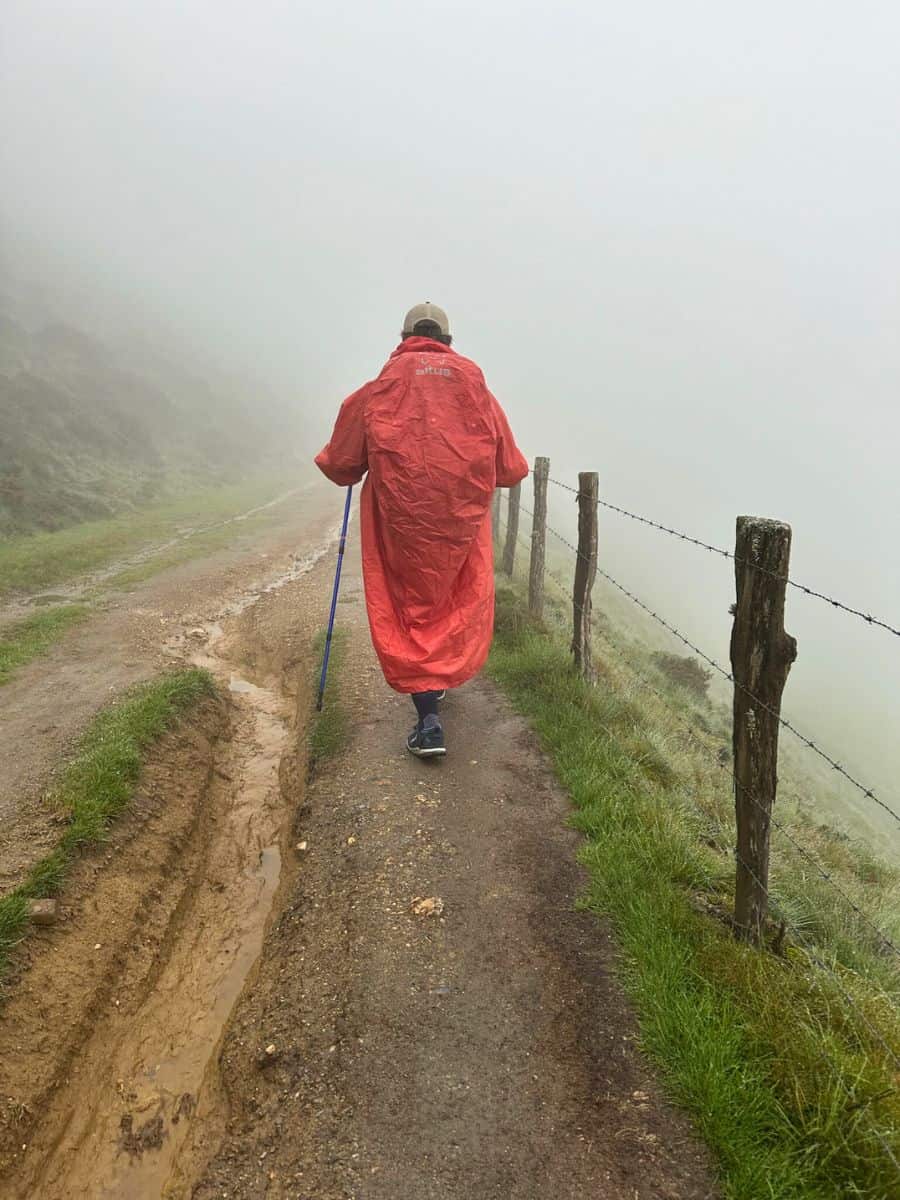
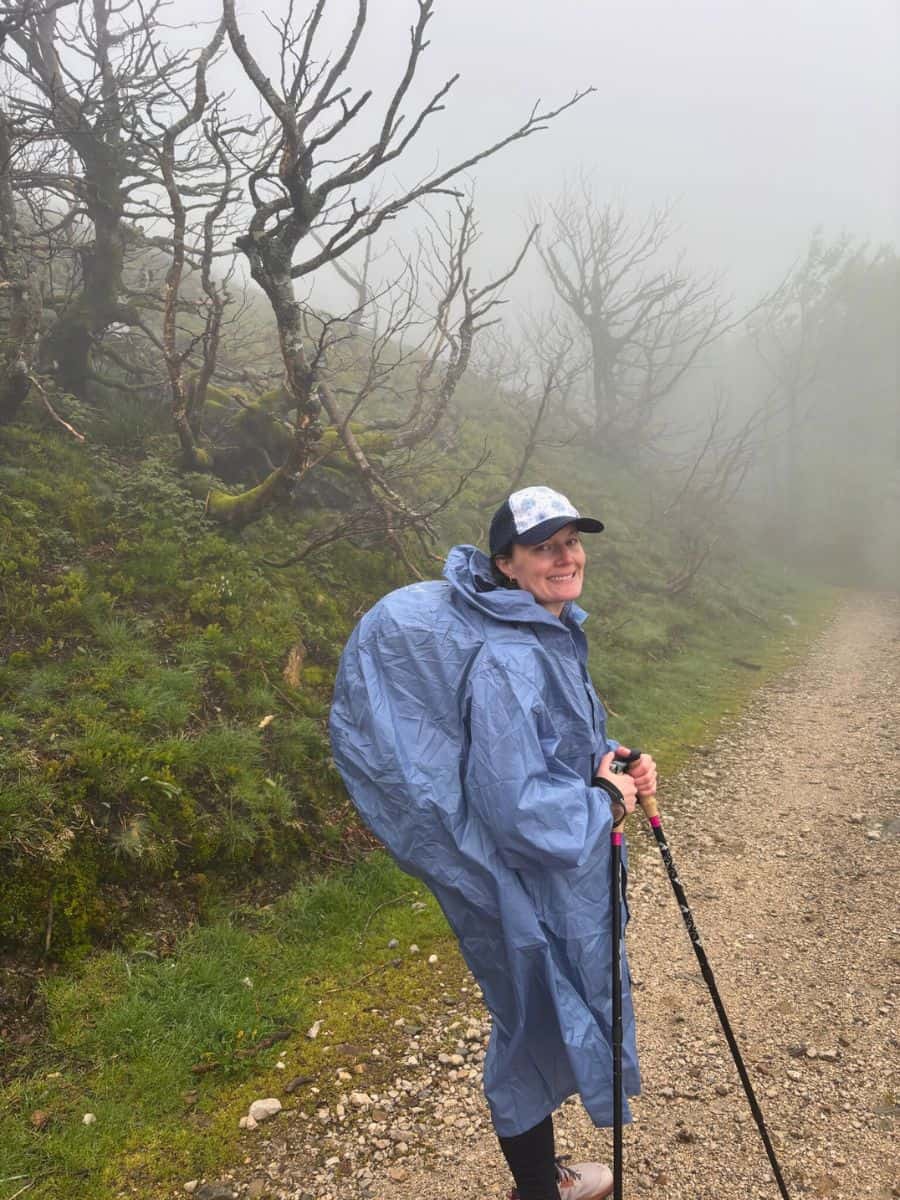
In the end, we used a two-part rain system:
- A super lightweight windbreaker: We wore the Janji Zephyrunner Wind Shell (which weighs just 4 ounces!) for light drizzle and chilly mornings, which doubled as our evening jacket.
- Altus ponchos: For steady or heavy rain – stored in an outer pocket on our packs for quick access. You can buy these from the Casa Ivar online store, or in stores in Saint-Jean-Pied-de-Port.
3. Good Socks (and a Sock Strategy)
Happy feet are everything on the Camino. Socks might sound like a small detail, but finding the right pair – and packing enough of them – is huge.
- Liz’s pick: Injinji midweight toe socks, and lightweight toe socks from Amazon on hotter days. Toe socks are great for blister prevention and toe flexibility.
- Steve’s pick: Darn Tough merino wool socks for comfort, durability, and cushion.
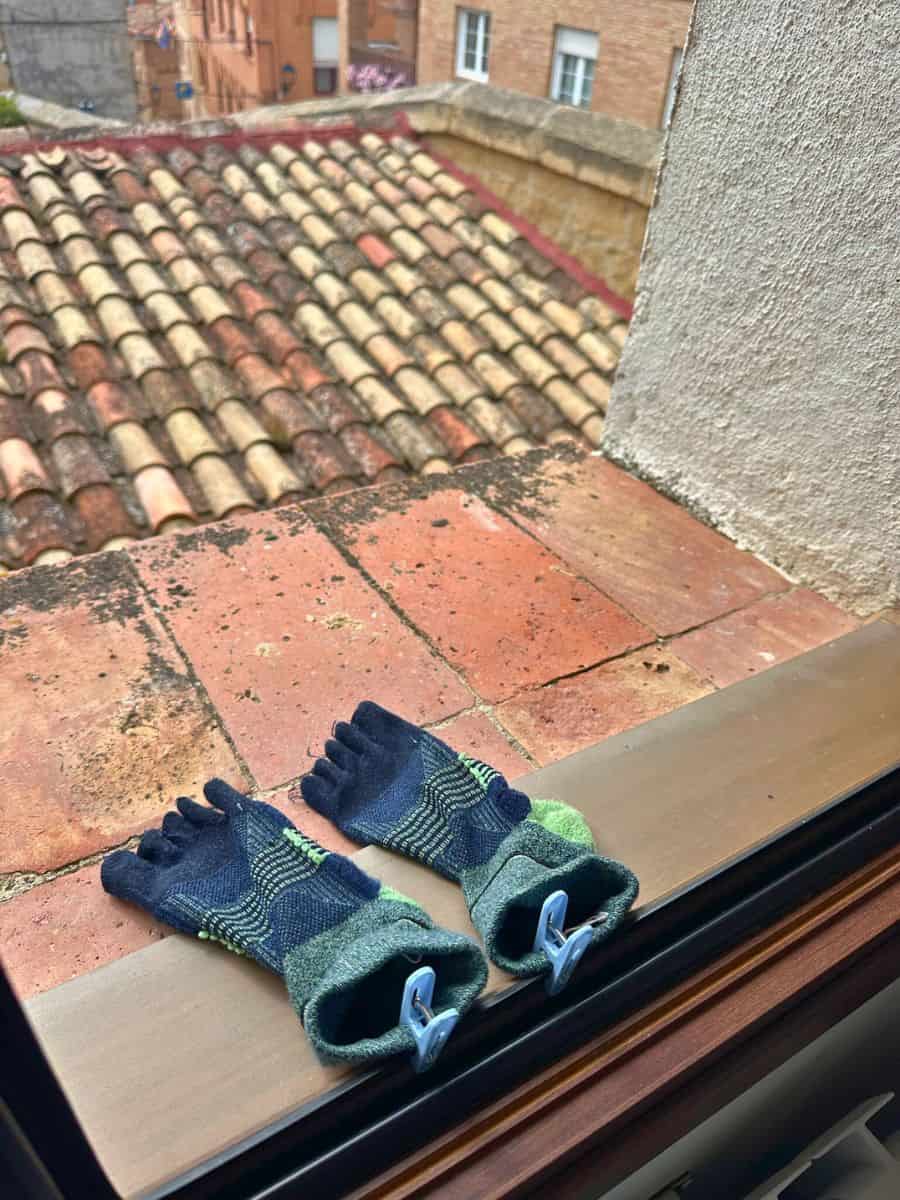
We each packed three pairs, which allowed for sock changes during the day if needed and enough backups for laundry rotations and unexpected wet days.
4. A Portable Charger
You’ll rely on your phone more than you might expect – for trail apps, weather checks, taking photos, tracking your distance, and more. And in shared dorms, power outlets can be limited.
We brought a small power bank that gave at least one full charge (or more) and never regretted the weight.
- Our pick: Nitecore NB10000 Gen 3 Ultra-Slim Power Bank. We’ve used it on several trips and it delivers a fast charge for two devices simultaneously.
5. A Belt Bag/Fanny Pack
I hesitated on this one, especially since my backpack’s hip belt pockets are actually big enough for essentials like a phone. But once Steve committed to bringing a fanny pack, I followed – and I’m so glad I did.
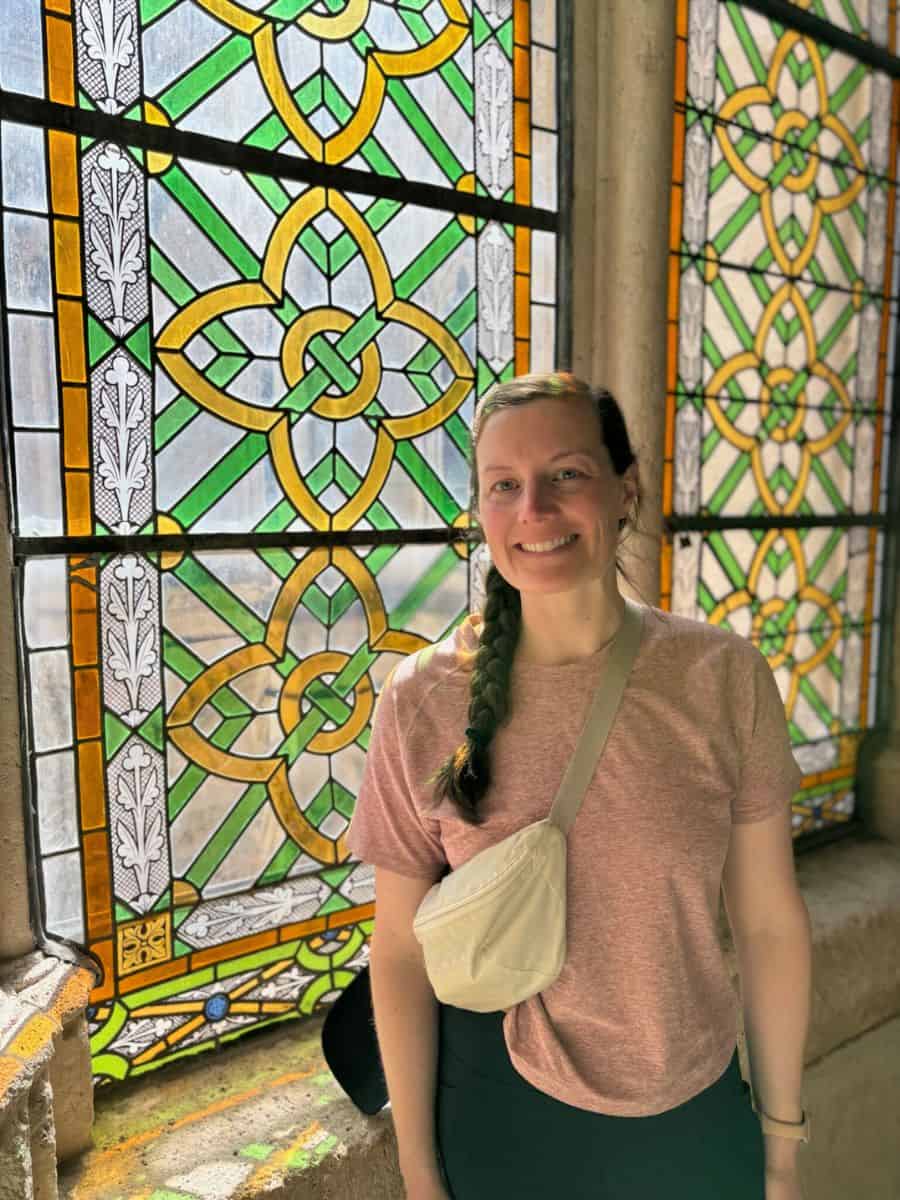
We kept phones, passports, money, lip balm, and other small must-haves in our belt bags. It meant fewer stops to rummage through backpacks, easier access to ID at albergue check-ins, and a handy mini purse for exploring towns in the evening.
It also let us reserve our hip belt pockets for items we used less frequently but still needed on-hand – like sunscreen, corded headphones, or tissues.
- Liz’s pick: Hikerkind | Gossamer Gear Bumster Belt Bag
- Steve’s pick: Osprey Ultralight Collapsible Stuff Waist Pack
5 Items We Didn’t Need
Even with a pretty dialed-in list, there were still some things we didn’t end up needing. One of the greatest Camino packing tips we can offer is to analyze your packing list carefully to think about how much you really need each item. The “just in case” items can add up quickly!
1. Too Many Toiletries and “Just in Case” First Aid Items
I had the essentials, but I also packed retinol cream (which I can’t even get myself to use regularly at home), a full roll of KT tape, multiple mini sunscreen bottles, and more. Spanish pharmacies are everywhere – along the Camino Francés, you’ll usually pass multiple per day. They’re well-stocked, staffed by friendly pharmacists, and often cheaper than U.S. equivalents (with some exceptions).
Stick to your daily-use essentials, especially if you plan to carry everything on your back. Trust the Camino to provide the rest.
2. A Second Water Bottle
We each brought two water bottles. But even on days with fewer towns to walk through, we only used one. And we never ran out of water. We refilled at fountains whenever we saw them, and we also often grabbed an Aquarius (sports drink) while walking.
For us, one bottle was enough. If you’re walking in peak summer, a second bottle or hydration bladder could be smart.
3. A Large Stash of Electrolytes
Related to hydration, I packed a bunch of Nuun and LMNT, thinking we’d use them daily to stay on top of hydration. But the truth? We much preferred stopping at a café or store along the way for a cold Aquarius. It became part of our daily Camino routine.
Next time, I’ll still bring a small tube of Nuun, just in case we hit a stretch with minimal stops or feel depleted. But we definitely didn’t need a full stash.
4. Extra Hiking Pants
We each packed two pairs of long pants for hiking, but we both had a favorite pair – and wore them daily.
Since we were doing laundry every afternoon, extras just weren’t needed. We think one pair of long pants and one pair of shorts for hiking would be perfect. That’d free up space for something different, like a dress, skirt, or for men, a pair of casual shorts.
5. Headlamp
This one’s tough. This seems like an essential item – and at many times of the year, it is. The truth is, when we walked in late spring, we didn’t use our headlamps once. The sun rises early and sets late at that time of year.
Still, ours are so small and lightweight that we’d probably pack them again as a safety precaution.
Camino Packing Tips: Know Your Clothing Style
A lot of people follow the “wear one, wash one” mantra, rotating between two hiking outfits. I planned to – but quickly found myself gravitating to the same hiking outfit every day. I just did laundry in the afternoon, and my hiking clothes were dry and ready to wear by the next morning.
The key to knowing your style? There isn’t really one. I didn’t know my preferences until I started walking. But if you like the idea of having non-hiking clothes to wear in the evening, you might want to try packing just a single hiking outfit. Or, if you’re not sure you’ll wash clothes every day, you likely need to pack multiple hiking outfits. From there, you’ll figure out your preferences along the way.
Whatever you do, don’t overpack with clothes. You pass through larger cities every week or so on the Camino Francés. If you really need a certain clothing item, you can buy it along the way.
Nail Your Own List
You can find countless Camino packing lists online (including our own). But ultimately, no one’s list is perfect – the best list is the one that fits your body, season, and walking style.
Here’s what helped us dial in ours:
Try on Backpacks In-Person
Your backpack is one of your most important pieces of gear. Before you buy, make a list of what you’re looking for – size, weight, storage features – then head to a store like REI and try on several options.
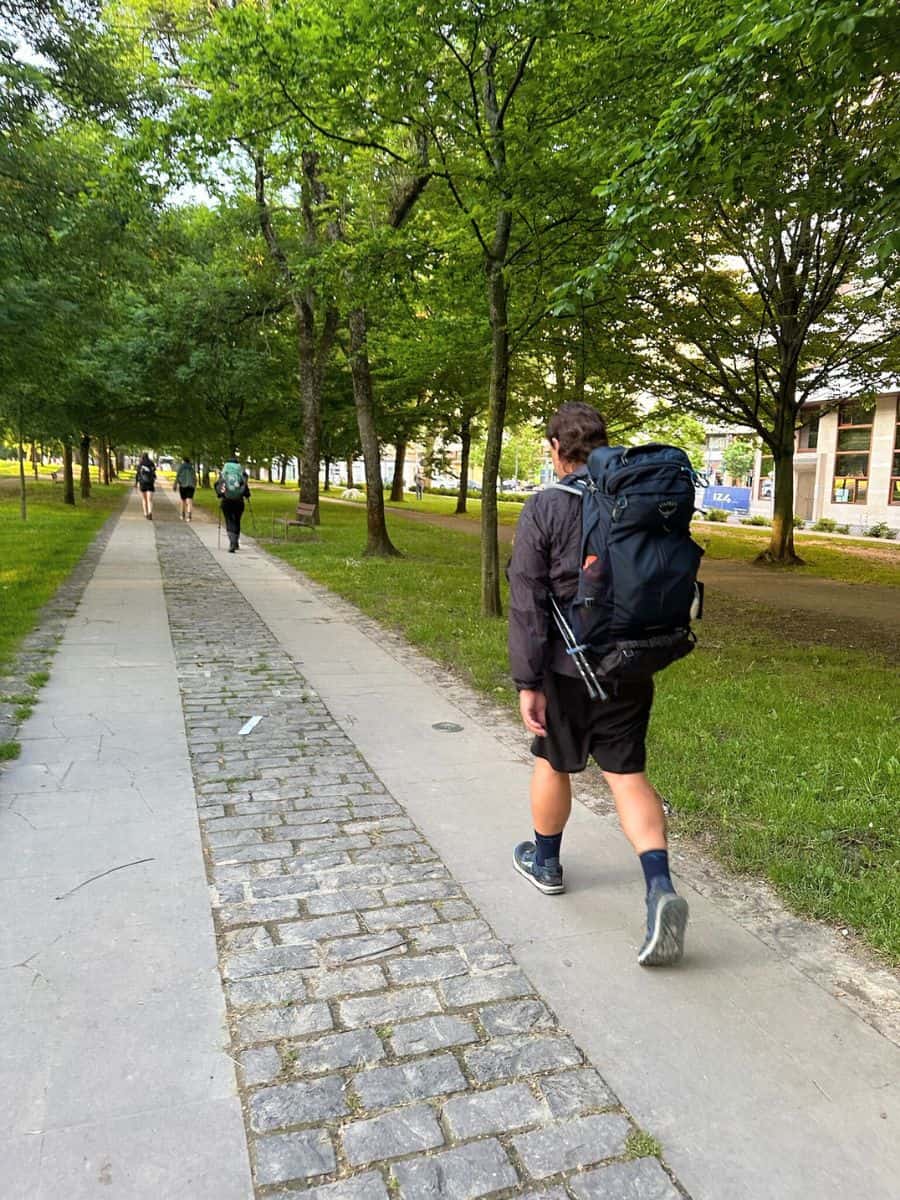
Fit and comfort matter more than brand or specs on paper. I was convinced I needed something in the 28–34L range, but ended up with a 41L pack that just felt right (it cinches down easily when I don’t need the extra space).
- Liz’s pick: Gregory Jade 43 (note: the XS/S version is actually 41L)
- Steve’s pick: Osprey Stratos 34
Wear Tried and Tested Shoes
We both wore Altra Lone Peak trail runners for the first section of the Camino Francés – not because they’re trendy, but because we’d already logged plenty of miles in them. Our feet were used to the fit, and we knew they’d hold up well over long days of walking.

This isn’t the time to experiment with a brand new shoe. Even if you only have a couple of months to prepare, start walking in the shoes you plan to bring as soon as possible. That way, you can catch potential problems – like rubbing, hot spots, or sizing issues – long before you hit the trail in Spain.
That said, the Camino has your back. You’ll pass shoe stores fairly often on the Camino. If your shoes truly aren’t working, you can buy a new pair mid-walk. It’s not ideal, but it’s doable – and better than pushing through foot pain for days.
Pack for the Season (But Choose Adaptable Pieces)
We walked in late spring, when mornings were cool and afternoons could get hot. Layers were key. We skipped heavy jackets, but had windbreakers, a lightweight jacket, buffs, and long sleeves to adjust as needed.
Walking in early spring or fall? Add a puffer or thermal layer.
Walking in summer? Focus on sun protection and breathability.
Don’t Pack Your Fears
This one’s tough, especially for first-timers, and it’s one of the Camino packing tips we heard about most often. Overpacking for “what if” scenarios might make you feel better in the short term, but ultimately usually just means carrying weight you don’t need.
There’s a lot of talk about the 10% rule for Camino packing – your pack should weigh no more than 10% of your body weight for ideal walking comfort. In reality, with water, your pack could easily be 15% of your body weight. Stress less about nailing the percentage, and more on overall items in your pack.
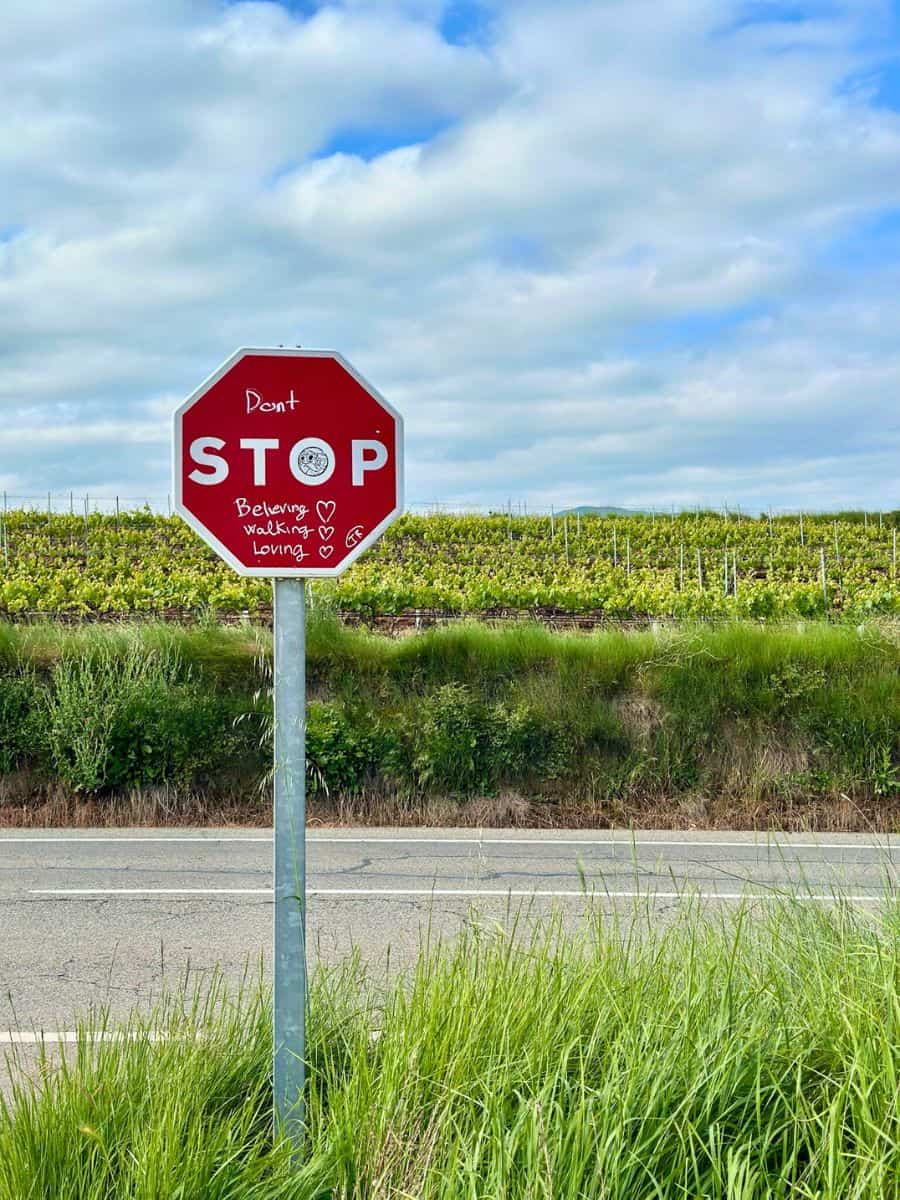
Trust the trail. Spain has excellent pharmacies, friendly locals, and several gear shops if you really need something.
We avoided this mostly by making a packing list early on, and actually putting our gear in piles so we could see it. As the trip got closer, we’d take out items we didn’t think would get much use.
Final Thoughts: Camino Packing Tips
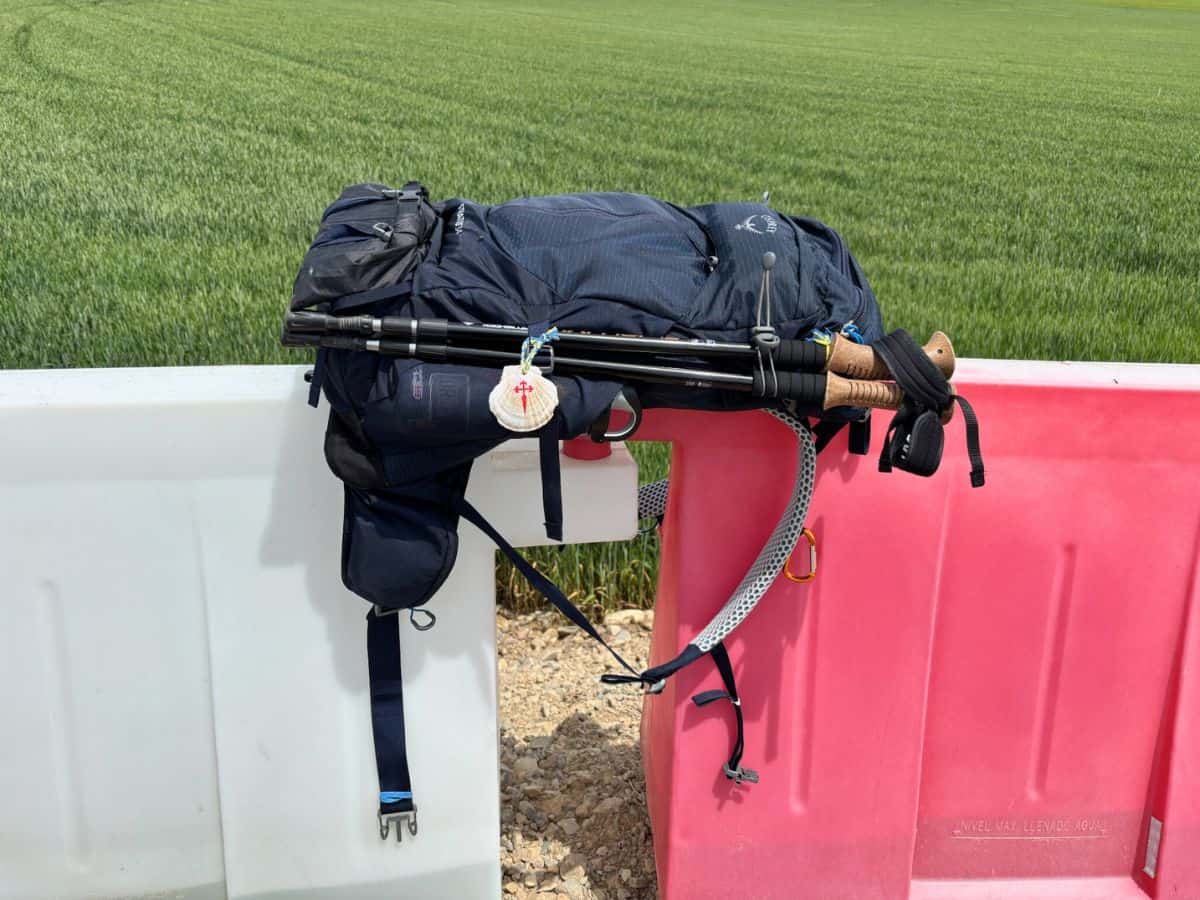
Packing for the Camino can feel overwhelming, but it doesn’t have to be. Focus on what you’ll truly use, stay flexible for the season, and prioritize comfort over completeness.
Whether you’re aiming for a 15-pound pack or just hoping to avoid overpacking regrets, we hope our own Camino packing tips help you build a list that’s functional.
Planning to Walk the Camino De Santiago?
Check out our resources for walking:
- Walking the Camino for Someone Else: A Walk with Purpose
- Daily Camino Routine: A Day in the Life of a Pilgrim
- Walking the Camino Francés in Sections
- Camino Francés for Beginners: Advice for Planning and Walking
- 7 Reasons to Walk the Camino – And Why You’ll Find More
- Camino Francés Surprises: 9 Things You Might Not Expect
- Where to Stay on the Camino Francés: A Practical Guide